Human Dignity in No Man’s Land II.
Dedicated to the site of the former Ummenwinkel forced labour camp in Ravensburg.
1.
How can a place whose built history has disappeared become legible again without destroying its present form?
The starting point for this proposal is the former Ummenwinkel forced labour camp in Ravensburg.
The immediate impulse came from a report by journalist Susanne Babila (SWR) on the Holocaust Memorial Day for Sinti and Roma, which I saw on 2 August 2026 on Tagesthemen.
The report led me to a place: a forest, a landscape in which the physical traces of the former camp have largely disappeared. People can walk there, pass through the forest, linger. Yet the history of the place is now barely legible.
A forest that conceals its history.
The forest should remain a forest.
The intention is not to clear it, reconstruct its former state, or recreate the past. The landscape as it exists today possesses its own dignity. It has grown over decades and has become part of the history of this place.
The intervention should therefore be as minimal as possible.
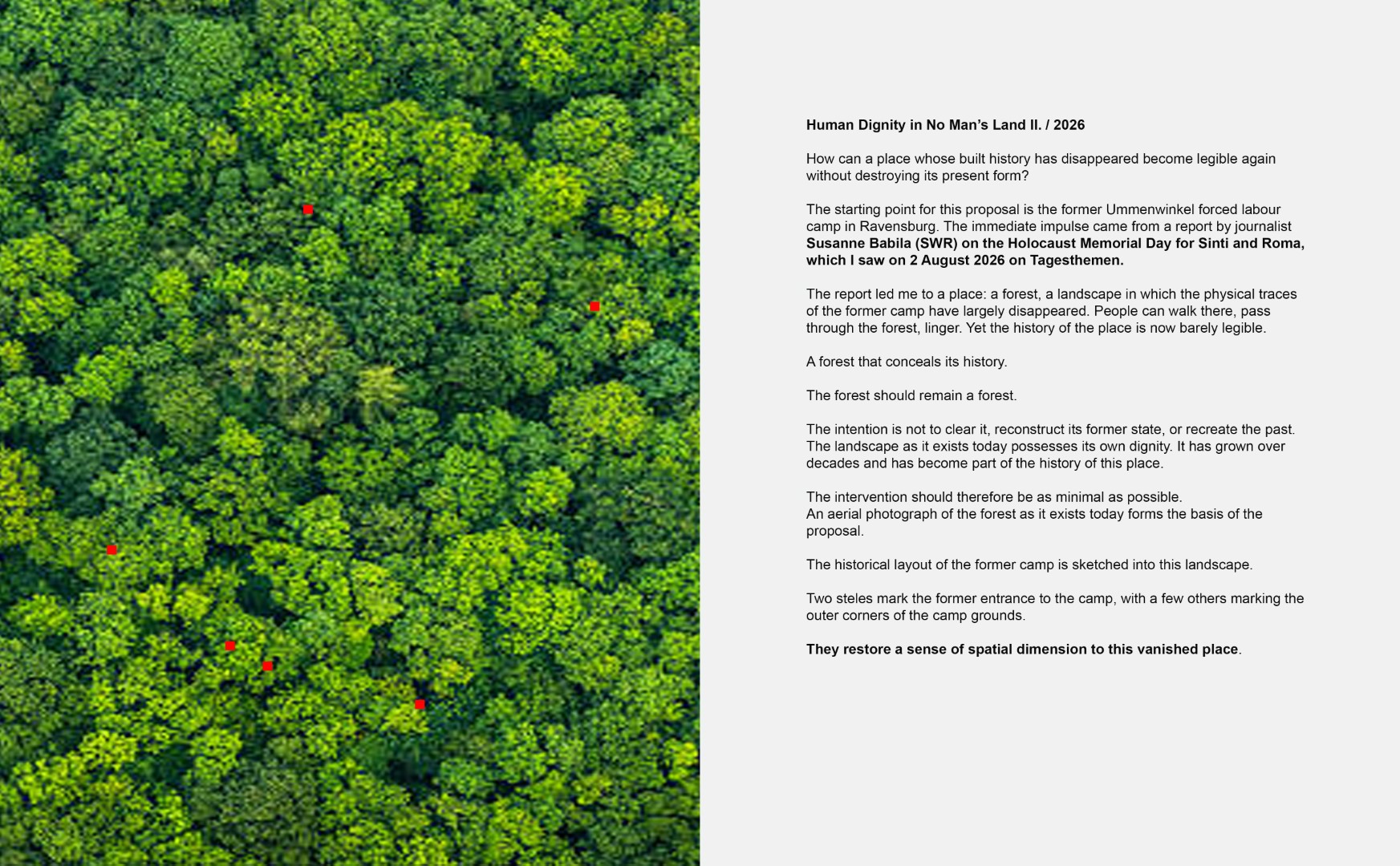
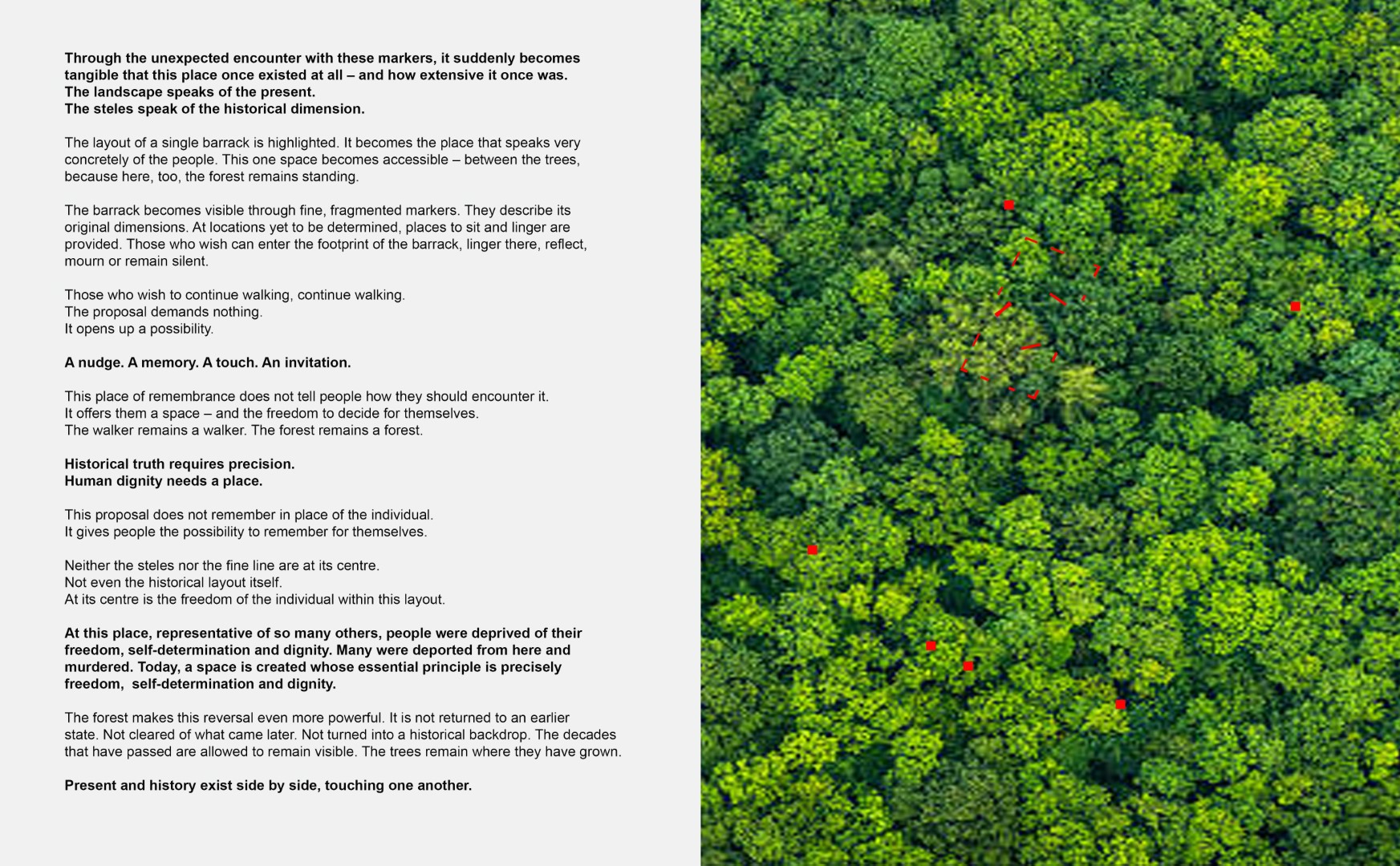
An aerial photograph of the forest as it exists today forms the basis of the proposal. The historical layout of the former camp is sketched into this landscape.
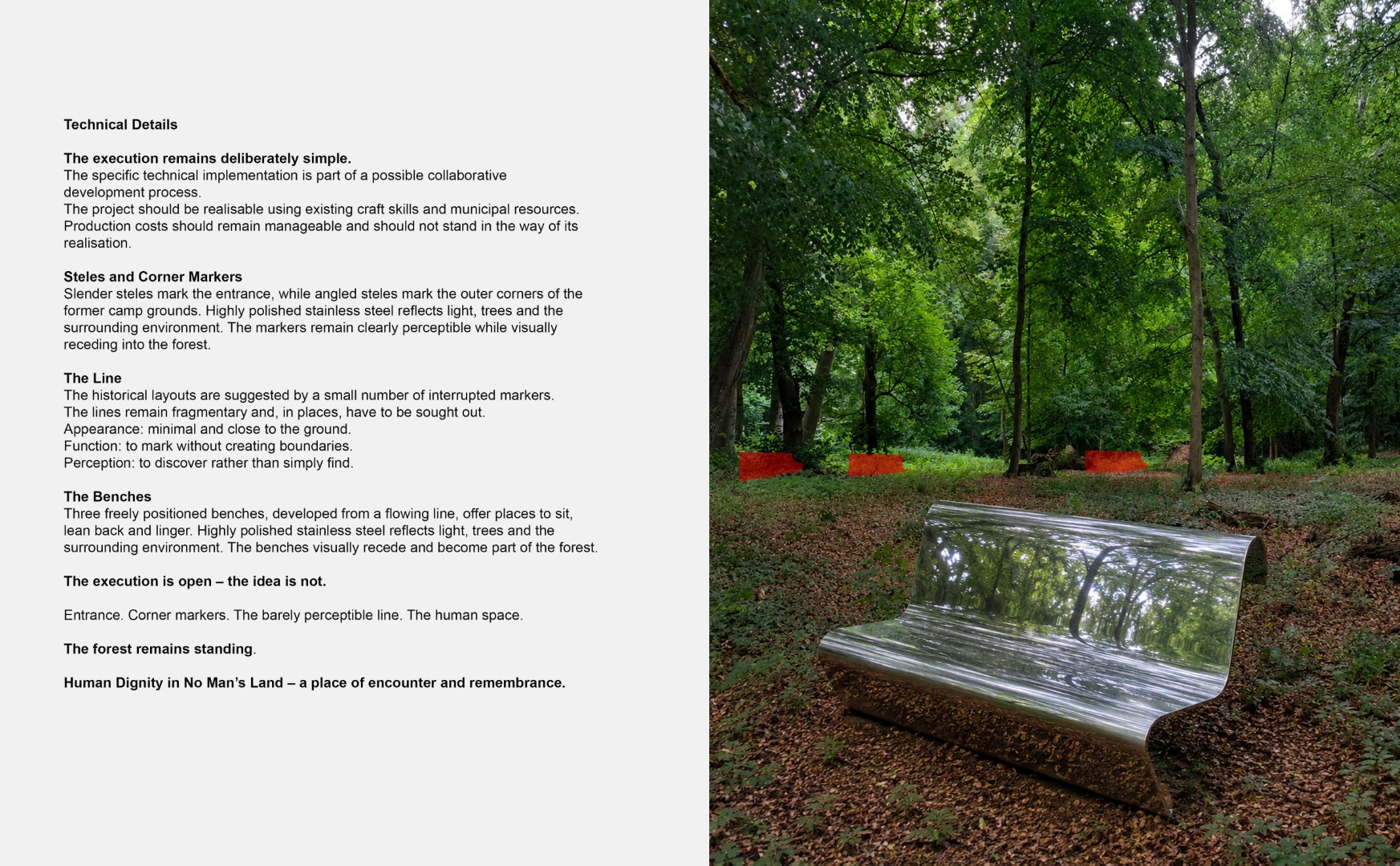
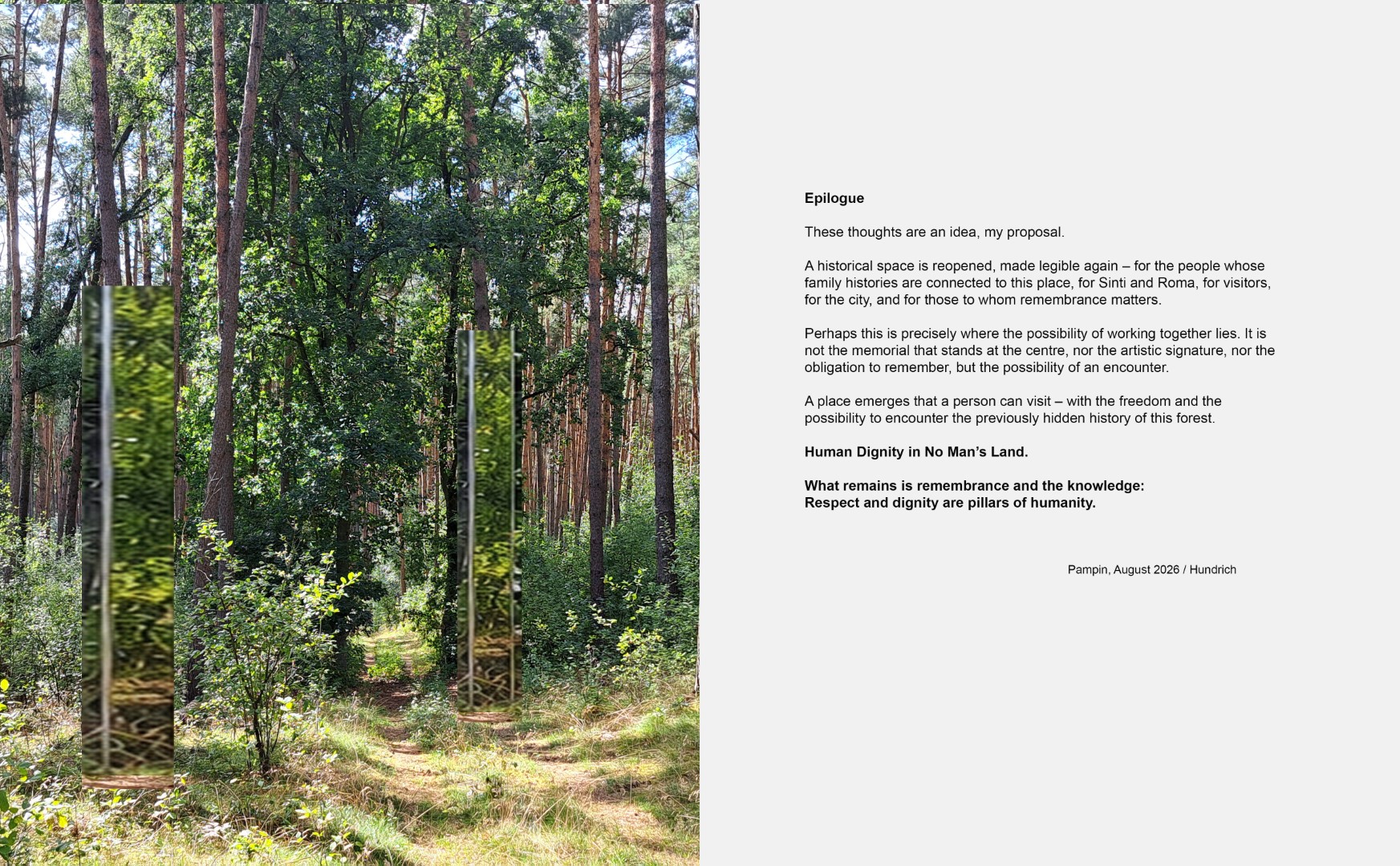
Two steles mark the former entrance to the camp, with a few others marking the outer corners of the camp grounds. They restore a sense of spatial dimension to this vanished place.

Human Dignity in No Man’s Land II. / 2026
Complete project documentation — English PDF // Human Dignity in No Man’s Land II. – Hundrich 2026
Die menschliche Würde im Niemandsland II. / 2026
Vollständige Projektdokumentation — Deutsche PDF // die menschliche Würde im Niemandsland II – Hundrich 2026